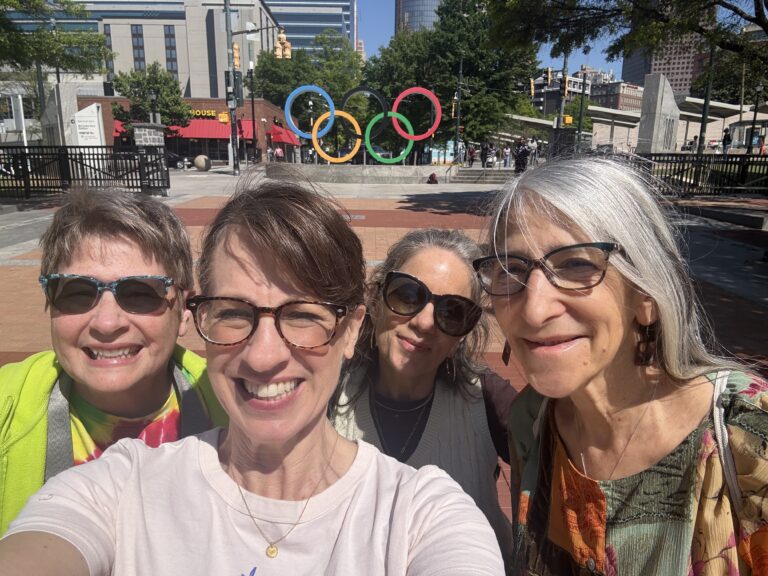
Aging Forward Alliance leaders enjoying time together at the 2026 On Aging Conference in Atlanta.
In nonprofit work, it is easy to assume that every new challenge requires a new solution, whether that means finding another tool, developing a new process, bringing in outside expertise, or creating something from scratch. Yet one of the things we continue to see across the Aging Forward Alliance is that, very often, someone else has already faced a version of the same question and is willing to share what they learned.
That is one of the strengths of a national network.
Across Aging Forward, community-based organizations are helping older adults remain connected, independent, engaged, and supported, and while every community is different, many of the challenges are remarkably familiar. Affiliates are thinking about volunteer recruitment, transportation, lifelong learning, social connection, changing community needs, sustainable funding, and how to make limited resources stretch further.
When those organizations connect with one another, experience becomes a shared resource.
A transportation program that has spent years refining its processes may be able to help another organization work through a question in a single conversation. A volunteer manager may have developed a training resource or policy that gives a colleague somewhere useful to begin. An executive director may be able to share not only what worked, but also what they would approach differently the next time.
Those exchanges matter because they come from real experience. They reflect programs that have been tested in communities, adjusted when something did not work, and shaped by the realities of serving older adults alongside volunteers, partners, and often very small staffs.
There is also a human side to this kind of connection that can be easy to overlook.
Community-based nonprofit work can sometimes feel isolating, particularly for leaders and staff who carry a wide range of responsibilities. Having colleagues in other communities who understand those pressures creates a different kind of support. Sometimes the most valuable part of a conversation is not the answer itself, but simply hearing, “We have been dealing with that too.”
Those conversations also help us recognize broader patterns. When affiliates in different communities begin noticing similar changes in volunteer expectations, the needs of solo agers, referral patterns, or the kinds of support older adults are seeking, individual observations become shared insight. Together, we can see things that may be harder to recognize alone.
Aging Forward creates opportunities for those connections through learning collaboratives, roundtables, conferences, webinars, and introductions among affiliates, but the true strength of the Alliance comes from what happens between those formal opportunities.
It grows when someone asks a question, shares a resource, offers an introduction, or talks candidly about something they are still trying to figure out.
Because sometimes the best resource is not something new at all. It is someone who has been there before—and is willing to help.